Homeowners Tired of Gravel
Country lots in Woolwich and Wilmot and older city lots still run on gravel. Paving ends the spring regrading, the dust and the stone that plows push onto the lawn.
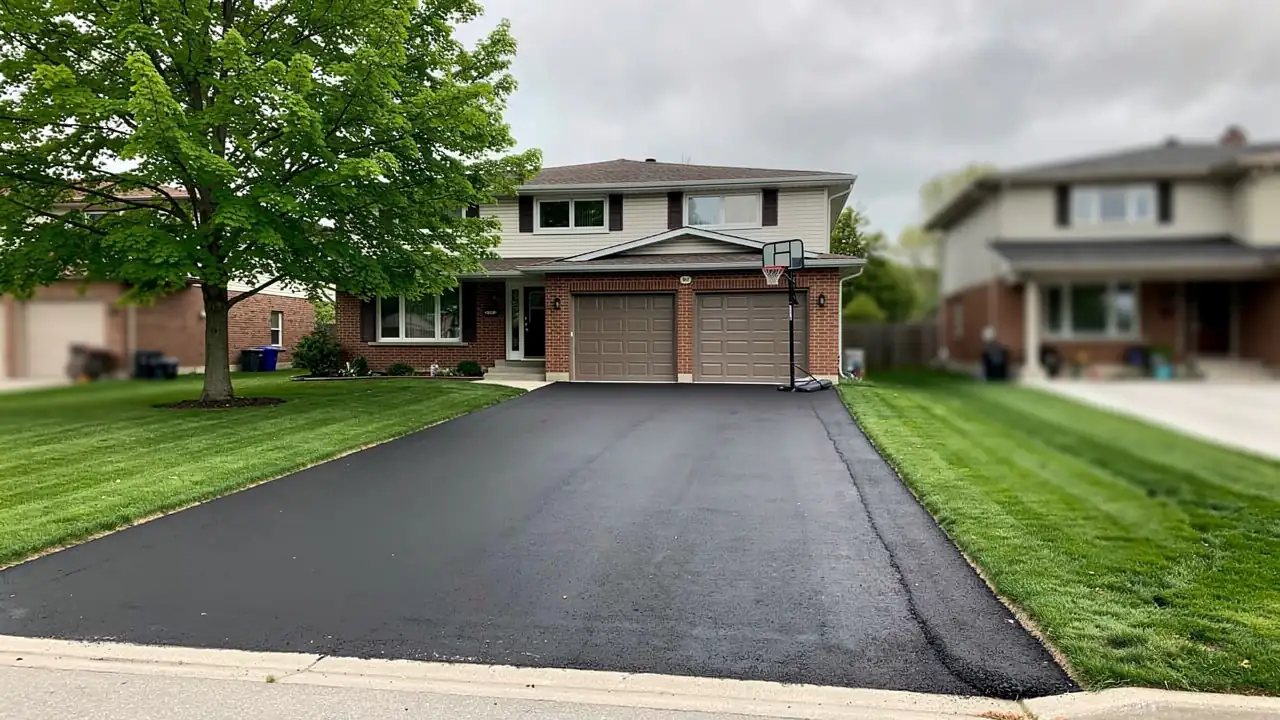
New driveways, carports and widening
Kitchener Asphalt Paving Pros installs new asphalt driveways, carport pads and driveway widenings for homeowners and builders across Waterloo Region. We have paved since 2013 and finished more than 2,500 jobs, from gravel farm lanes in Woolwich to tight infill lots in central Kitchener.
Every driveway we install follows one written spec: 150 to 200 mm of compacted Granular A, 60 mm of compacted HL3 hot mix and a 2% fall away from the house. If you already have asphalt that is breaking up, our driveway removal and replacement service rebuilds it, and asphalt resurfacing renews a tired surface on a sound base.
This page covers new installs: which build suits your lot, what goes under the asphalt, how the City of Kitchener widening permit works and how to treat a fresh driveway through its first year.
Who we pave for
We install asphalt driveways wherever there is gravel, bare ground or a new parking need. Most of our new-install calls come from four kinds of property owner.
Country lots in Woolwich and Wilmot and older city lots still run on gravel. Paving ends the spring regrading, the dust and the stone that plows push onto the lawn.
Subdivision driveways in Huron Park, Doon South and Rosenberg are often left as gravel or a thin base coat. We pave once backfill around the foundation has settled, usually 1 to 2 years after closing.
Builders on narrow infill lots in Kitchener and Waterloo book us for the final driveway after landscaping grades are set. We work to the site plan and coordinate with the concrete crew pouring walks and steps.
Carport pads, a second parking spot beside the garage or a wider apron for a growing household. Widening onto the boulevard needs a City permit, which we prepare for you.
Every install includes grading, base work, paving, hand-tamped edges, street cleanup and a written 1-year labour warranty.
Time to pave
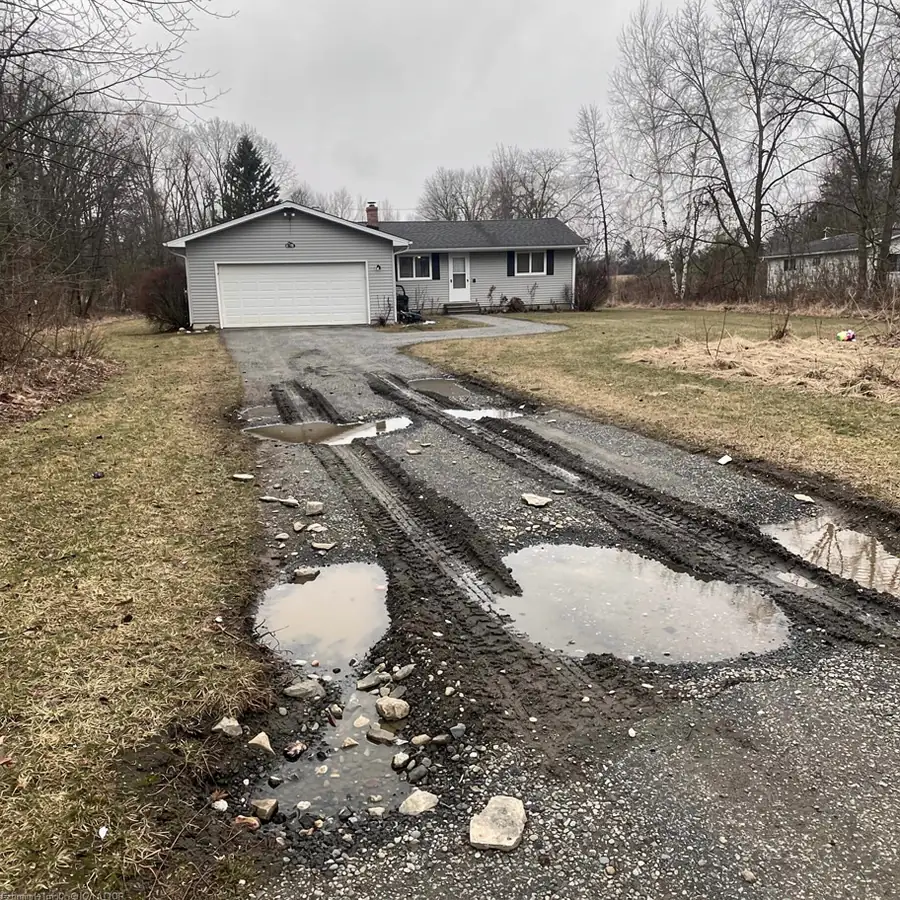
A gravel driveway is ready for asphalt when you regrade it every spring and the ruts, puddles and dust come straight back. An old asphalt driveway is ready to go when its cracks are wide, connected and sinking.
These are the signs we look for on a site visit:
The first five point to a gravel driveway that is ready to pave, often with only a top-up of new stone. Alligator cracking and sinking on old asphalt mean the base has failed, which our asphalt tear-out and rebuild service explains in detail.
Install tiers
The right build depends on what is under your driveway now, and we find that out by probing the base on the site visit. Sound gravel needs a top-up; soft clay or topsoil needs to be dug out and rebuilt.
The table compares all four tiers we install. New driveways use the first two; the last two apply to existing asphalt.
This is the lowest-cost new driveway, at $4.00 to $6.50 per sq ft, and it works when the existing gravel is deep, clean and free-draining. We dig test holes to check before we quote it.
The crew regrades to a 2% fall, adds Granular A wherever the old stone is thin or mixed with soil, then compacts it with a vibratory roller. If a test hole hits topsoil or clay a few inches down, we quote the excavated build instead.
When there is no real base, or the gravel sits on soft clay or organic soil, we dig down to firm ground and build up from there. Much of central and east Kitchener sits on clay and silt till that holds water, so this build is common there.
Non-woven geotextile fabric goes over wet subgrade so the stone cannot push down into the clay. New Granular A is placed and compacted in lifts until it stops moving under the roller.
Yes, we pave under carports. The paver rarely fits under the roof, so the crew places hot mix by skid steer and hand rake, then compacts around posts and pier footings with a plate compactor.
We slope the pad so roof runoff from the drip edge and downspouts drains away instead of pooling at the post bases. Pads are built to the same base and thickness as the driveway they join.
A widening has to bond to the old asphalt or it opens into a crack by the first spring. We saw-cut the existing edge to a straight vertical face, coat it with SS-1 tack and compact the new mix tight against it.
Fresh asphalt beside old looks darker for a season or two; a sealcoat evens the colour. Any widening that reaches the boulevard or curb needs the City permit described below.
| Build type | When it fits | Base work | Compacted asphalt | Expected life |
|---|---|---|---|---|
| Grade and pave over gravel | Deep, clean gravel that drains well | Regrade, top up Granular A to 150 to 200 mm, compact | 60 mm HL3 | 15 to 25 years |
| New build on an excavated base | No real base, soft clay, fill or topsoil | Dig to firm subgrade, geotextile where wet, new Granular A in lifts | 60 mm HL3, or 50 mm HL8 + 40 mm HL3 for heavy use | 15 to 25 years |
| Peel and pave | Worn asphalt on a mostly sound base | Remove old asphalt, regrade and add stone; see removal and replacement | 60 mm HL3 | 15 to 25 years |
| Overlay | Grey, rough surface on a solid structure | Clean, repair, mill tie-ins, tack coat; see resurfacing and overlays | 40 to 50 mm HL3 | Adds 8 to 15 years |
Our process
Most driveways are paved in a single day once the base is ready, and a full rebuild or an oversized driveway takes two. Expect 2 to 4 weeks between signing and paving day in season, plus time for utility locates.
We measure the area, dig test holes to read the base, check where water goes and look at the curb, boulevard and any trees near the edge.
Within 2 business days you get a quote listing area, base depth, asphalt thickness, mix, drainage plan, start window and warranty.
We book free locates through Ontario One Call before anything is dug. Marking usually takes up to 5 business days.
The crew grades or digs out to the depth the quote lists, lays fabric if needed, then places Granular A and rolls it until it is firm.
Edges are shaped along lawns, walks and garage slabs. Hot mix is laid with a paver, then rolled with a double-drum vibratory roller while it is still hot.
We sweep the street and sidewalk, backfill edges with topsoil and walk the driveway with you to go over the first-year care rules.
City permit
You need a City of Kitchener permit to widen the part of your driveway on the boulevard, or to cut or lower the curb. Widening on your own side of the property line leaves the boulevard alone, but it still has to fit the zoning by-law's width limits.
We check both before quoting a widening and can prepare and submit the application for you, so the permit is in hand by paving day.
The permit applies to any change to the apron, boulevard or curb. The City also sets minimum clearances from fire hydrants, hydro poles, community mailboxes and City-owned trees, which can rule out widening on one side of a lot.
The City of Kitchener driveway widening page sets out the full rules.
The permit costs $400, and $249 comes back after the work passes inspection, so the net cost is $151. Apply at least 15 business days before the work, which is why we file as soon as you sign.
Homes on Regional roads such as Victoria Street or Homer Watson Boulevard pay $100 more and also need a Region of Waterloo access permit and road work permit.
Kitchener's zoning by-law caps how wide a driveway can be compared with the lot, so a widening that looks easy on paper can exceed the limit. We measure the frontage and check the by-law before we price the extra width.
The City explains why in its news post on widening a driveway safely, including the clearances inspectors check.
Other municipalities run their own process: Waterloo approves widenings and curb cuts separately, Guelph uses an entrance permit and townships issue entrance permits for their roads. Our Waterloo driveway paving and Guelph driveway paving pages cover those rules.
Pricing
A new asphalt driveway in Kitchener usually costs $4.00 to $6.50 per sq ft over sound gravel and $7.00 to $11.00 per sq ft when the base has to be dug out and rebuilt. Prices are before HST, and our minimum paving job is $2,500.
| Driveway | Grade and pave over gravel | Full excavation and new base |
|---|---|---|
| Single, about 400 to 500 sq ft | $2,500 to $3,250 | $2,800 to $5,500 |
| Double, about 800 to 1,000 sq ft | $3,200 to $6,500 | $5,600 to $11,000 |
| Price per sq ft | $4.00 to $6.50 | $7.00 to $11.00 |
The three numbers that move a quote most are how much new stone the base needs, how deep we dig and how easily trucks can reach the work. A two-lift heavy-duty build, a curb cut and the City permit add to the total.
Replacing an existing asphalt driveway also carries removal and disposal costs, which our driveway replacement cost breakdown covers.
Aftercare
Keep cars off a new driveway for 48 to 72 hours, longer in a heat wave, and keep heavy vehicles off for 2 weeks. Fresh asphalt takes 6 to 12 months to fully cure and stays soft through its first hot summer.
These habits protect it while it hardens:
Our coal-tar-free asphalt sealcoating service handles that first coat. Tire scuffs and kickstand dents in the first summer are not workmanship defects, so the warranty does not cover them.
FAQ
These are the driveway questions we hear most after the price. Our asphalt paving FAQ covers the rest.
A properly built and maintained asphalt driveway lasts 15 to 25 years in Waterloo Region. Base depth and drainage decide where in that range it lands, and sealing every 2 to 3 years slows the surface from drying out.
You can drive a car on it after 48 to 72 hours, and longer during a heat wave. Wait 2 weeks before parking an RV, trailer or loaded work truck on it.
Yes. We place the hot mix with a skid steer and hand tools under the roof, compact around each post with a plate compactor and slope the pad so roof water drains away.
Yes, until about mid-November, as long as the air is at least 5 C and rising and the base is not frozen. September and October are good paving months, and the hot mix plants usually close for winter in December.
Only if you park heavy vehicles such as RVs, trailers or work trucks, where we lay 50 mm of HL8 under 40 mm of HL3. For cars, an extra 25 mm of asphalt does far less than a deeper, better-compacted base.
Yes, a new driveway is the right time to do it. Our heated asphalt driveway service builds electric or hydronic snowmelt into the base before paving.
Free estimate
Paving searches peak in April and the spring calendar fills by May, so February to April is the time to book. Call or send the form now and we will visit within 2 to 3 business days to probe your base and measure.