Built-up roof repairs
We cut out blisters, splits and punctures down to sound felt, then set new ply sheets in hot asphalt and lap them past the damage. The repair is flood coated and gravelled to match the rest of the roof.
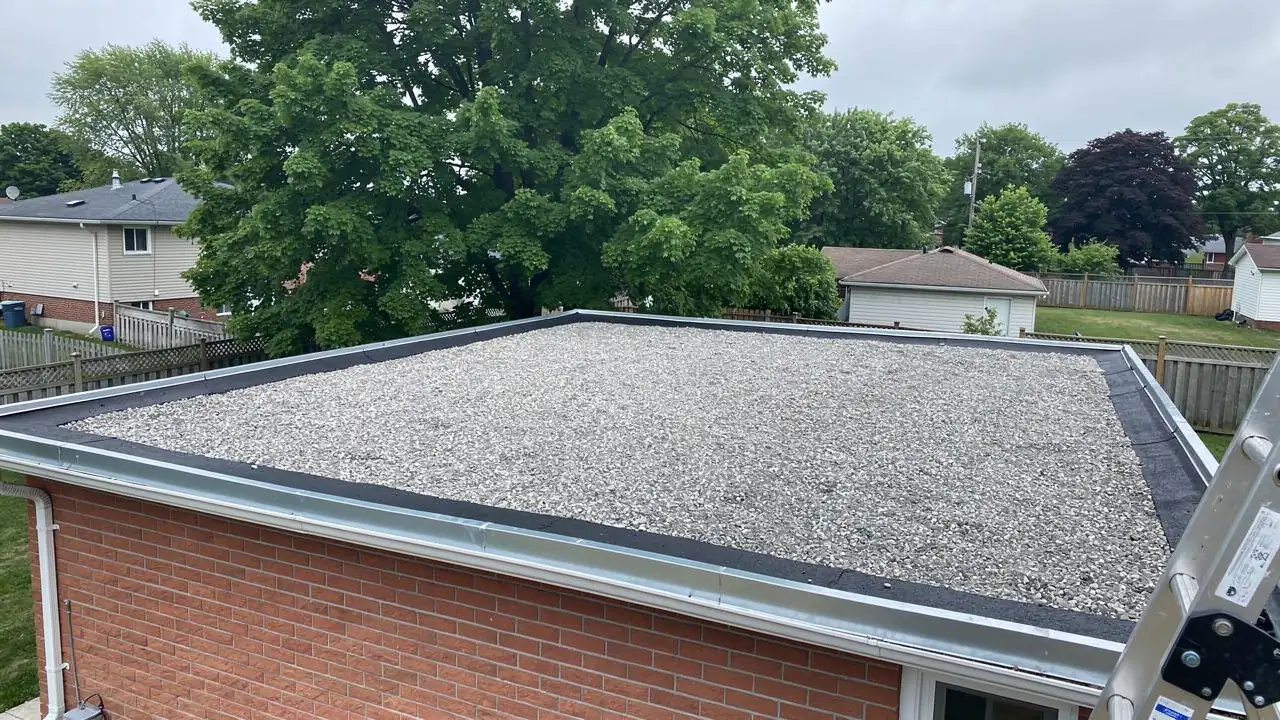
Hot-mopped flat roof repair
Kitchener Asphalt Paving Pros repairs and resurfaces hot-mopped asphalt flat roofs on garages, workshops and low-slope commercial buildings across Kitchener and Waterloo Region. Roofing asphalt is a harder, oxidized grade than the binder in paving mix, but the craft is the same: heat it correctly, spread it evenly and keep it hot until it bonds.
Most roof calls come from owners of flat-roofed detached garages behind older Kitchener homes, contractor and farm shops, and plaza or light industrial buildings whose built-up roofs are leaking, holding water or shedding gravel. We repair the roof you already have: splits and blisters cut out and re-plied, worn areas re-mopped, flashings rebuilt and a fresh flood coat and gravel laid on top.
We have run hot asphalt crews in Waterloo Region since 2013 and finished more than 2,500 jobs. On a roof, that experience shows up as an inspection before any price, fall protection on every edge and a kettle treated as the fire hazard it is.
What we do
Our roof work covers hot-mopped built-up roofs, the multi-layer felt, asphalt and gravel systems found on many older garages, shops and commercial buildings in Waterloo Region. Every job starts with an inspection so the repair matches what is actually failing.
We cut out blisters, splits and punctures down to sound felt, then set new ply sheets in hot asphalt and lap them past the damage. The repair is flood coated and gravelled to match the rest of the roof.
Where the top flood coat has dried out and the felts are showing, we clean the area and mop on fresh hot asphalt. It restores the waterproof top layer before bare felts start to absorb water.
On a roof with sound plies but thin, scattered gravel, we strip loose stone, lay a new flood coat and embed clean gravel while it is hot. The gravel shields the asphalt from UV and keeps wind and foot traffic off the membrane.
Most flat roof leaks start at an edge, not in the field. We rebuild base flashings at parapet walls and curbs, reset roof drains and scuppers, and seal around vent stacks and rooftop units.
Warning signs
A flat roof needs repair when water stays on it, the surface opens up or a leak shows inside. Catching it at the blister or bare-spot stage usually means a patch instead of a new roof.
Waterloo Region winters make small defects grow quickly. Meltwater runs into an open split, freezes, and lifts the felts a little further every cycle.
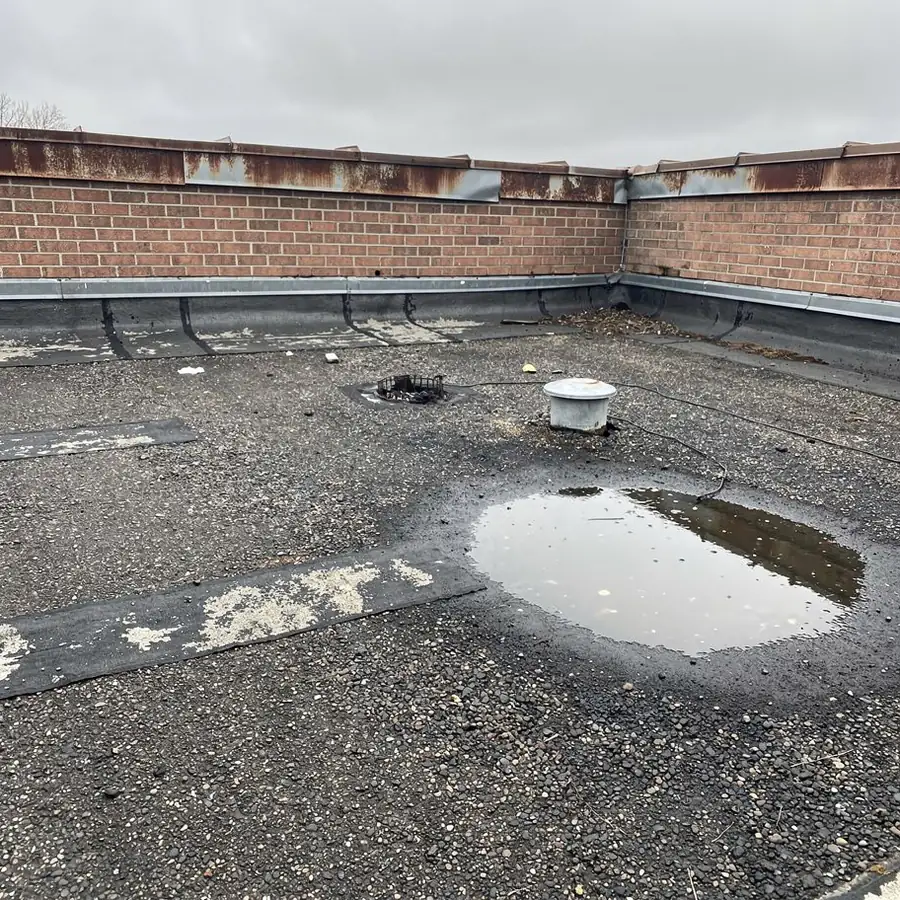
Water still standing 48 hours after rain points to a sagging deck, blocked drain or low spot. Ponds speed up ageing of the asphalt and add weight to the structure.
Blisters are pockets of trapped air or moisture between plies. Splits run in straight lines over deck joints, and bare patches show where gravel has washed into the gutters.
Look for flashing pulling away from a parapet or brick wall and for brown stains on the ceiling below. A soft spot underfoot often means wet insulation or a rotting wood deck.
Your options
Most hot asphalt roofs we see are built-up roofs, known as BUR, and the real choice is between a spot repair, a restoration and a new built-up roof. The table compares typical service lives, which depend heavily on drainage and upkeep.
A built-up roof is three or four layers of fibreglass ply felt, each set in a mopping of hot roofing asphalt. A thick flood coat goes on top and gravel is pressed into it while it is still hot.
The layers give redundancy: one punctured ply does not mean a leak. That is why built-up roofs suit garages and shops where people walk on the roof to clear snow or service equipment.
If the insulation and deck are dry and the plies are still bonded, a repair or restoration is usually the better value. Test cuts at the site visit tell us which one applies.
When wet insulation or a soft deck covers a large share of the roof, patching only moves the leak. At that point we will tell you plainly that the roof needs a full tear-off.
| System | Layers | Typical life | Best use |
|---|---|---|---|
| Spot repair | New plies set in hot asphalt over the damaged area, flood coat and gravel | As long as the surrounding roof | Isolated blisters, splits and punctures |
| Re-mop and regravel | Loose gravel removed, repairs made, new flood coat and gravel over sound plies | Adds about 5 to 10 years | Worn surface over dry, well-bonded plies |
| 3-ply built-up roof | Base sheet, 3 ply felts in hot asphalt, flood coat and gravel | About 15 to 20 years | Detached garages, sheds and small shops |
| 4-ply built-up roof | Base sheet, 4 ply felts in hot asphalt, flood coat and gravel | About 20 to 30 years | Commercial roofs with rooftop units and foot traffic |
Modified bitumen is a factory-made sheet of polymer-modified asphalt, usually torched or cold-glued in two layers, while a built-up roof is assembled in place from felts and hot asphalt.
Our process
A built-up roof goes on in five stages, from deck to gravel, and a small garage roof is usually one to two working days. Repairs follow the same order on a smaller area.
We strip back to the deck where needed and replace rotted wood planks or plywood. A built-up roof is only as flat and solid as the deck under it.
A heavier base sheet is nailed or mopped to the deck, depending on the deck type and any insulation. It separates the new roof from the deck and gives the first plies a clean surface.
Roofing asphalt is heated in a kettle to the temperature its maker specifies, well above 200 C and below its flash point. Each ply felt is rolled into a fresh mopping and lapped so every spot on the roof has three or four layers.
A heavy flood coat is poured over the top ply, and clean, dry gravel is spread into it while it is hot. About half of each stone should sit in the asphalt so it stays put in wind and rain.
Cant strips go where the roof meets a wall, then layered base flashings run up the wall and under a metal counter-flashing. Drains and scuppers are set in the plies and stripped in so water leaves the roof at its lowest point.
Where we work
Most hot-mopped roofs we repair sit on three kinds of buildings, and each has its own weak spot. These are typical jobs, not a list of past clients.
Older lots in Victoria Park, Mount Hope and Cherry Park often have flat-roofed garages with a single scupper at the back. Leaves block it, the roof ponds and the felts split along the deck boards.
Shops on rural lots in Woolwich and Wilmot often carry low-slope additions with built-up roofs over the office or tool room. Owners who book asphalt garage and shop floors often ask us to look at the roof on the same visit.
Low-slope commercial roofs in Waterloo and Cambridge usually fail at rooftop unit curbs and drains first. Property managers often pair roof repairs with parking lot paving or other commercial paving on the same site.
Pricing
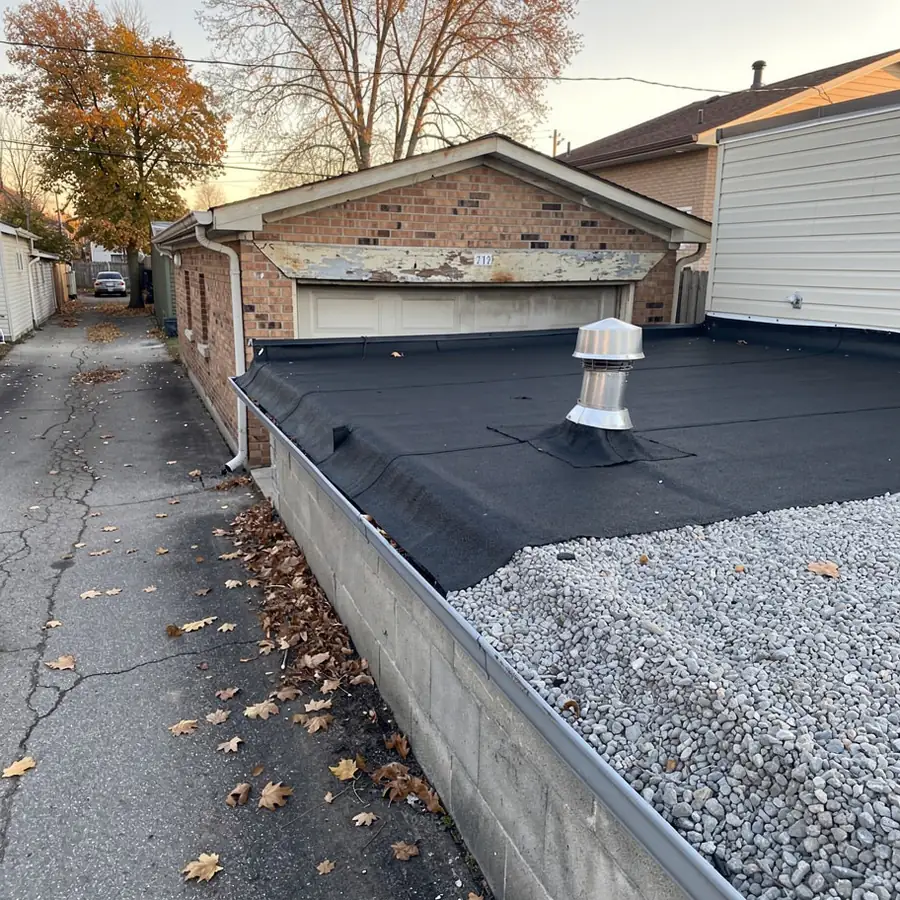
Small flat roof repairs start from $600 before HST, and every larger job is quoted in writing after an inspection. The price depends on how much of the roof is failing and what is under it.
Your quote lists the area, number of plies, flashing work and any deck or insulation allowance line by line. If test cuts show more damage than expected, we stop and price the change before going further.
FAQ
These are the questions garage owners and property managers ask most often about hot asphalt roofs.
A well-drained built-up roof typically lasts about 15 to 30 years, depending on the number of plies and how it is maintained. Clearing drains every fall, fixing blisters early and regravelling bare spots are what push a roof toward the top of that range.
Not always, although most roofs people call tar and gravel are actually built with asphalt. True tar roofs use coal tar pitch, a by-product of coking coal that flows and self-heals at low temperatures, which is why it was used on dead-level roofs.
Coal tar pitch and asphalt do not bond well to each other, so we identify the existing material before any repair. A patch in the wrong material is a common reason a flat roof repair fails within a year.
Yes, but only as a temporary fix. We can seal an active leak with cold-applied roof cement and reinforcing fabric, then return for the permanent hot-mopped repair on dry days in the warmer months, because hot asphalt will not bond to a wet or frozen roof.
Yes, that is our main trade. Many shop and plaza owners combine roof repairs with asphalt repair services on the lot, or with a paved shop floor, so one crew handles both on a planned schedule.
Free inspection
Send us a few photos of the roof and the ceiling below, or call 548-457-2043, and we will book an inspection. You get a written quote that names the repair, the area and the materials, from a crew that has finished more than 2,500 jobs since 2013.