Mon to Sat 7:00am to 9:00pm, Sun 9:00am to 9:00pm

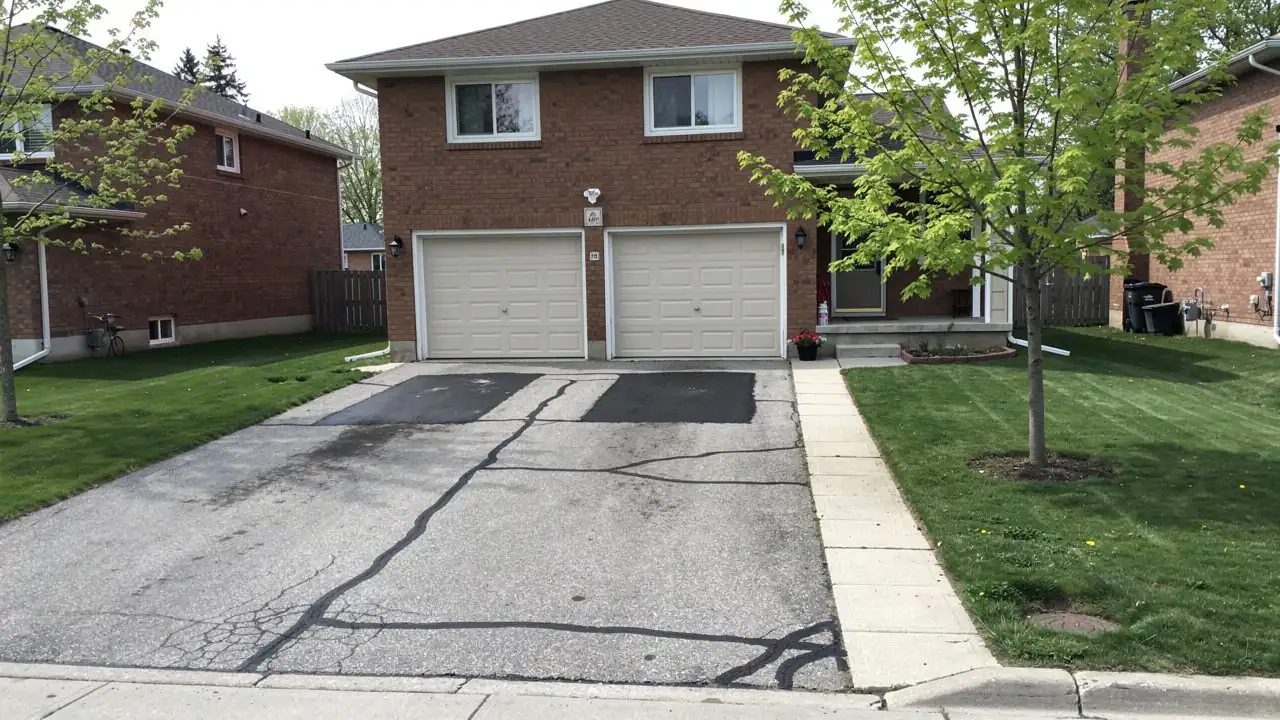
Repaired asphalt driveway in Kitchener neighbourhood

Diagnosis first, then the right fix

Asphalt Repair in Kitchener for Driveways and Parking Lots

Kitchener Asphalt Paving Pros repairs asphalt driveways, parking lots and private lanes across Waterloo Region, and every repair starts with a diagnosis rather than a price per bucket. We probe the base, read the crack pattern and check where water sits before choosing between crack sealing, a saw-cut patch, an infrared repair or a new coat of sealer.

Homeowners usually call in spring, when a pothole opens by the garage or the edge along the lawn starts to crumble. Property managers, condo boards and plaza owners call about the same damage at a larger scale: trip hazards at store entrances, sunken rings around catch basins and cracked drive lanes that need attention before another winter.

Since 2013 our crews have completed more than 2,500 paving and repair jobs, so we know which fixes hold on Kitchener clay and which ones are back after one thaw. That record is also why we will sometimes tell you a repair is not worth your money and a resurface or replacement is.

Repair services

Asphalt Repair Services We Offer in Kitchener

We offer five repair and maintenance services, each with its own page covering method, materials, weather limits and price. Most driveways and lots need two or three of them together, in the right order.

Infrared Asphalt Repair

Our infrared asphalt repair softens the damaged area with radiant heat and blends in rejuvenator and fresh hot mix. The repair fuses to the pavement around it, which suits catch basin rings, birdbaths and trip hazards.

Asphalt Power Washing

Hot-water asphalt power washing at controlled pressure lifts oil, salt film and grime without stripping fine stone from the surface. Customers book it alone in spring or as the first step of a sealcoat.

Why asphalt fails

How Freeze-Thaw Cycles Break Down Asphalt in Waterloo Region

Freeze-thaw cycles break asphalt by letting water in, freezing it and then removing the support it leaves behind. A Waterloo Region winter swings above and below 0 C dozens of times, and each swing repeats the damage.

The cycle runs in four stages. Most repair calls we get in March and April are stage four on a driveway or lot that showed stage one the autumn before.

1. Water gets in

Rain and snowmelt enter through open cracks, seams and porous, oxidized asphalt. On the clay and silt till under much of Kitchener, that water has nowhere to drain, so it sits in the base.

2. Ice lifts the surface

Water expands about 9% as it freezes, pushing the asphalt up and widening every crack it fills. Frost reaches about 1.2 m (4 ft) deep here, far below any driveway base, so drainage matters more than depth.

3. The thaw leaves a void

When the ice melts, the lifted asphalt settles onto base that is now wet, loose and weaker than before. The surface looks intact but is bridging a soft spot.

4. Traffic breaks through

Tires flex the unsupported asphalt until it cracks into pieces and pops out as a pothole. Road salt adds to the damage by speeding up ravelling on unsealed, grey asphalt.

Soil changes the pace. Sandy ground on the Waterloo Moraine under west Kitchener and Waterloo drains faster and heaves less, while clay neighbourhoods see the same cracks turn into potholes within one or two winters.

Breaking the cycle at stage one is cheap: sealed cracks and a sealed surface keep water out of the base. Every stage after that costs more to fix.
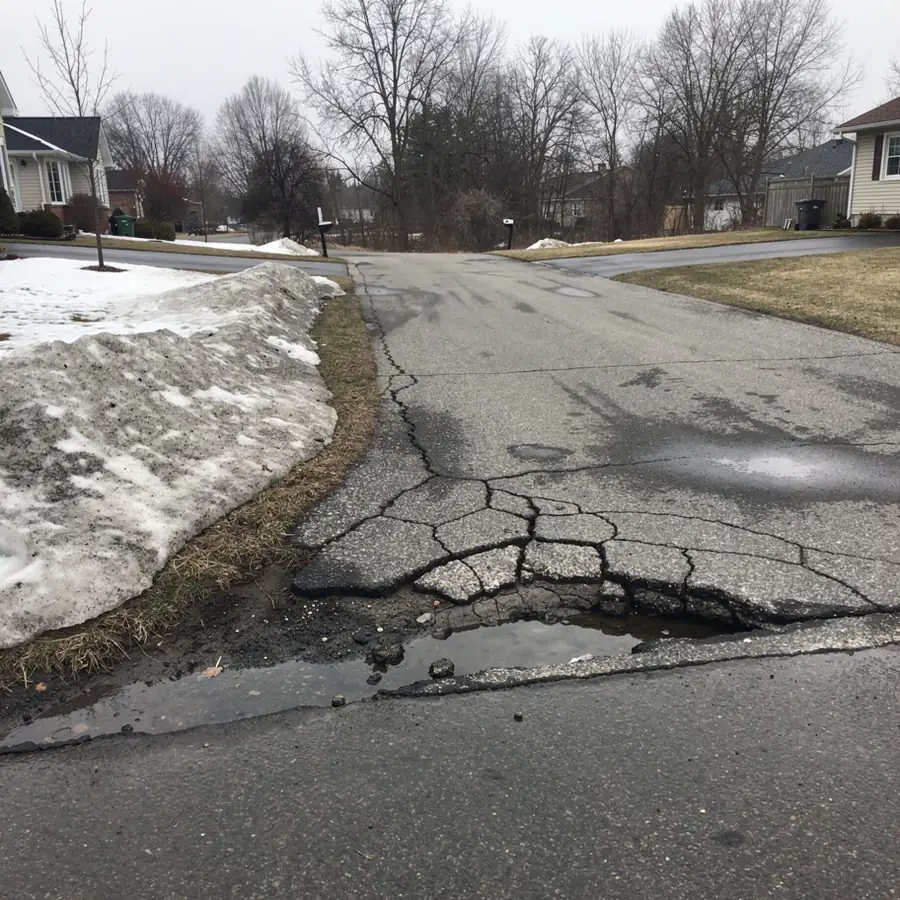
Frost heaved cracked asphalt in early spring

Diagnosis

Match the Damage to the Right Repair

The right repair depends on what caused the damage, not on how bad it looks. A wide crack on a sound base is a quick sealing job, while a small patch of alligator cracking can mean the base underneath has failed.

Use the table to read your own driveway or lot, then the notes below for quick checks you can do yourself before we visit.

Cracks

A crack you can fit a pencil into is past what a cold-pour filler can hold. Cracks that run straight across the driveway at fairly even spacing are thermal and move every season, so they need routed hot-pour sealing.

Our driveway crack sealing service covers how we decide between filling and sealing each crack.

Potholes and Sunken Spots

Press the edge of the hole with your boot. If pieces break away and the stone underneath is wet or muddy, the base is involved and needs a saw-cut asphalt patch.

Shallow dips on firm ground, especially around catch basins, are often a better fit for seamless infrared patching.

Alligator Cracking and Base Failure

Cracks that join into small blocks like reptile skin, often in wheel paths or below a downspout, mean the base has given up. Sealing them only hides the problem for a season.

One or two small areas can be cut out and rebuilt. When the pattern covers a large share of the surface, driveway removal and replacement is the repair that lasts.

Faded, Grey or Stained Surfaces

Pour a cup of water on the asphalt. If it darkens and soaks in within a minute, the surface is porous and due for coal-tar-free sealcoating.

Oil spots must be cleaned and primed first, or they bleed through the sealer, which is why driveway power washing usually comes first.

Common asphalt damage, what it means and how we fix it
DamageWhat it meansRepair methodWhere to start
Hairline cracks under about 6 mm (1/4 in)Surface shrinkage from age and sun; little movementClean, fill and then seal the surfaceCrack filling
Working cracks 6 to 25 mm (1/4 to 1 in) that widen in winterThermal cracks that open in cold and close in heatRout and seal with hot-pour rubberized sealantRouted crack sealing
PotholesWater got under the surface and the base lost supportSaw-cut full-depth patch, or infrared on a sound basePothole repair
Alligator crackingFatigue failure of the base under traffic or waterFull-depth patch if small; replacement if widespreadRemoval and replacement
Settled areas near catch basinsBase washed out or settled around the structureInfrared reshaping, or base repair and patchInfrared repair
Oxidized grey, rough surfaceUV has dried the binder and fine stone is looseningSealcoat if sound; overlay if ravelling is deepSealcoating or resurfacing
Oil and fuel stainsPetroleum is softening the binderDegrease, wash, prime, then sealPower washing

The big decision

Repair, Resurface or Replace?

Repair when the base is sound and the damage is limited to a few areas. Resurface when the structure is sound but the whole surface is worn, and replace when the base has failed or the pavement is near the end of its 15 to 25 year life.

We judge it on four things: base condition, age, crack width and depth, and the share of the surface that is damaged. As a working rule, once roughly a quarter to a third of the surface needs patching, repairs stop being the cheaper choice.

How we decide between repair, resurfacing and replacement
FactorRepairResurface (overlay)Replace
Base conditionSound; no sinking or heavingSound, with only a few soft spots to fix firstSoft, wet, heaving or sinking in several places
Pavement ageAny age, if the base is goodUsually 10 to 20 years oldNear or past 15 to 25 years
Crack width and depthIsolated cracks, sealableMany surface cracks, not through the baseWide, deep or alligator cracking
Share of surface damagedUnder about a quarterWear is spread across the whole surfaceMore than about a third, or the base itself
DrainageWater drains wellSlope can be kept with tie-ins milled at the garage and streetWater ponds or runs toward the house
Typical cost before HSTFrom $250 for crack filling; patches $8 to $15 per sq ft$3.00 to $4.50 per sq ft$5.50 to $8.50 per sq ft; $7.00 to $11.00 for a full rebuild
What you getStops the damage spreading8 to 15 more yearsA new 15 to 25 year driveway

An overlay laid over a failing base will crack again along the old cracks below it. Our warranty does not cover those reflective cracks, so we will recommend full asphalt replacement when the base is the problem.

If the structure is sound and the surface is simply tired, asphalt resurfacing gives a new top for about half the cost of replacing the whole driveway.

Pricing

What Asphalt Repairs Cost

Most residential asphalt repairs in Kitchener cost between $250 and $900 before HST, and commercial repairs are priced by the foot, the square foot or the day. The table shows typical ranges for each repair type and what moves the price.

Typical asphalt repair prices, before HST
RepairResidentialCommercialWhat changes the price
Crack filling and sealing$250 to $600 for a typical driveway$1.00 to $2.50 per linear foot, routing extraTotal crack length, width and whether cracks need routing
Patching and pothole repair$350 minimum; small patches $8 to $15 per sq ft$6 to $12 per sq ft, full depthDepth, base repair, number of areas per visit
Infrared repair$450 to $900 for the first area, up to about 1.8 m by 1.8 m (6 ft by 6 ft)Day rate $2,500 to $4,000How many areas can be grouped into one visit
Sealcoating$0.25 to $0.45 per sq ft, $250 minimum$0.18 to $0.30 per sq ftArea, surface porosity, crack and oil-spot prep
Power washing$150 to $350 per driveway$0.08 to $0.20 per sq ftArea, stain severity, moss and access

Grouping repairs saves money because the crew, saw, roller and hot mix arrive once. A spring visit that patches, crack seals and books the sealcoat costs less than three separate calls.

Every quote lists each repair by location and size, so you can see exactly what you are paying for.

Property managers

Maintenance Plans for Commercial Properties

A yearly maintenance plan lets property managers fix small damage before it becomes a reconstruction budget. A well-maintained lot on an engineered base can last 20 to 30 years; one left alone wears out years sooner.

Plans suit plazas, condo corporations, churches, offices and industrial yards. Our commercial paving crews schedule the work in phases so the property stays open.

Spring walk-through

After the thaw we walk the lot, mark every new crack, pothole and trip hazard, and give you a priced list ranked by risk and urgency.

Power washing and catch basin check

Winter sand and salt film come off first, with drains covered. We note any settled catch basin rings that hold water.

Crack sealing every spring or fall

New cracks are routed and sealed while they are still narrow, which keeps the footage, and the bill, small each year.

Patching and infrared repairs

Entrances, walkways and accessible parking areas are repaired first, then drive lanes, so the highest-liability spots are never left waiting.

Sealcoating every 2 to 3 years

Sealcoat goes down in sections over a day or a weekend, with barricades, on the cycle the lot's traffic and sun exposure call for.

Line painting coordinated

We do not paint lines ourselves. We schedule a line painting contractor right after sealing so stalls, fire routes and accessible spaces are marked before the lot reopens.

FAQ

Asphalt Repair Questions

These are the questions we hear most when someone shows us a damaged driveway or lot. Each service page answers the detailed questions for its own repair.

Can asphalt be repaired in cold weather?

Yes, but permanent hot-mix repairs need the paving season, roughly late April to mid-November with air at 5 C and rising. Outside that window, cold patch makes a hole safe until spring, and infrared asphalt repair can stretch the season on dry days because its hot box keeps mix workable for hours.

Will a repair match the colour of my driveway?

Not at first. New asphalt is jet black and older asphalt has oxidized to grey, so a patch stands out until it weathers.

Sealing the whole driveway the season after the repair evens out the colour, and our driveway sealing service can be booked for then.

How do I know if my driveway needs replacing instead?

Replace when the base has failed: alligator cracking across large areas, sinking or heaving that returns each spring, water pooling against the garage, or patches that keep failing. Our driveway replacement page explains how we rebuild the base so the problem does not come back.

Do you repair asphalt you did not install?

Yes, most of our repair work is on asphalt laid by someone else. Our 1-year labour warranty covers the patches and crack fills we apply, but not new damage caused by an old base we did not build.

Is it better to fix potholes now or wait until spring?

Fix them as soon as conditions allow, because every freeze-thaw cycle makes the hole wider and the base underneath wetter. A temporary fill in winter followed by a permanent pothole repair in spring costs less than letting one pothole become three.

Free assessment

Get Your Asphalt Damage Assessed

Send photos of the cracks, potholes or stains, or book a site visit and we will walk the driveway or lot with you and explain what caused the damage. We answer the phone seven days a week, Sundays included, so a pothole you spot on the weekend does not have to wait until Monday.

  • Diagnosis of the cause, not just the symptom
  • Written quote listing each repair by method, location and size
  • Honest advice when resurfacing or replacement is the better spend
Shop
324 Stirling Ave S, Kitchener, ON N2M 3H6
Monday to Saturday
7:00am to 9:00pm
Sunday
9:00am to 9:00pm
Call 548-457-2043Free Quote