Detached Garages
Older detached garages behind Kitchener and Cambridge homes that still have dirt or gravel floors, and new garages on country lots where the owner wants to park before winter.
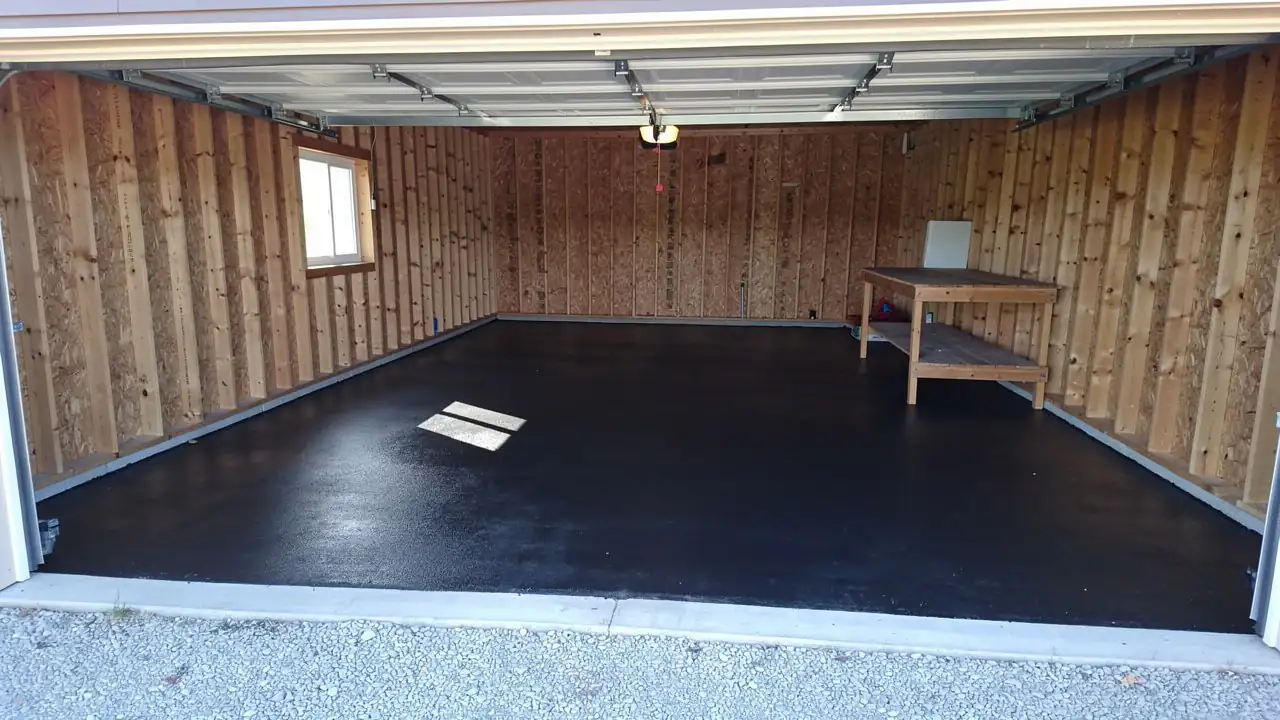
Garages, shops and farm buildings
Kitchener Asphalt Paving Pros paves dirt and gravel floors inside detached garages, workshops, implement sheds and pole barns across Waterloo Region and Wellington County. We have worked on hobby and farm properties from Wellesley to Rockwood since 2013, with the same crews and equipment that build our driveways.
An asphalt floor costs less than concrete, takes a car within days and can be laid inside a building that is already standing. We build it on 150 to 200 mm of compacted Granular A with two lifts of hot mix: 50 mm of HL8 binder under 40 mm of HL3.
It is not the right floor for every building. This page covers where asphalt works, where concrete is the better call and how to protect an asphalt floor from fuel, oil and point loads.
Buildings we pave
An asphalt floor suits buildings that need a hard, clean, drivable surface without the cost or wait of concrete. These are the four we are asked to pave.
Older detached garages behind Kitchener and Cambridge homes that still have dirt or gravel floors, and new garages on country lots where the owner wants to park before winter.
A flat, sweepable floor for benches, tool carts and a project car, without the dust that a gravel floor throws into finishes.
Tractor, mower and implement storage on farms in Woolwich, Wellesley and Puslinch, where mud tracked in on tires turns a gravel floor into ruts.
Post-frame buildings used for boats, trailers, RVs and stored equipment. We pave around each post and along the skirt boards by hand.
Honest comparison
Asphalt is the better choice when cost, speed and repairability matter most; concrete is better for heavy point loads, hoists and frequent fuel spills. We pave asphalt only, so if concrete suits your building better, we will tell you.
| Factor | Asphalt floor | Concrete floor |
|---|---|---|
| Cost | $4.50 to $7.50 per sq ft | Usually higher |
| Time to use | Cars after 48 to 72 hours, heavy equipment after 2 weeks | About a week before vehicles, weeks to reach full strength |
| Cold-weather install | Hot mix available late April to mid-November | Needs heated enclosures and blankets in cold weather |
| Fuel and oil | Gasoline, diesel and oil soften it over time | Stains but is not softened |
| Point loads | Jack stands, kickstands and implement stands can dent it, worst in summer heat | Resists point loads |
| Repair | Cut out and patch a section in a day | Saw-cut and repour, patch stays visible |
| Car hoist | Not suitable | Needed for hoist footings |
Many owners split the difference: an asphalt floor for parking and storage, with a concrete pad poured by a concrete contractor where a hoist or heavy bench will sit.
Decisions
Three decisions shape an indoor floor: how the base handles ground moisture, how the floor meets the door and what the heaviest thing on it will be. We settle all three on the site visit, before quoting.
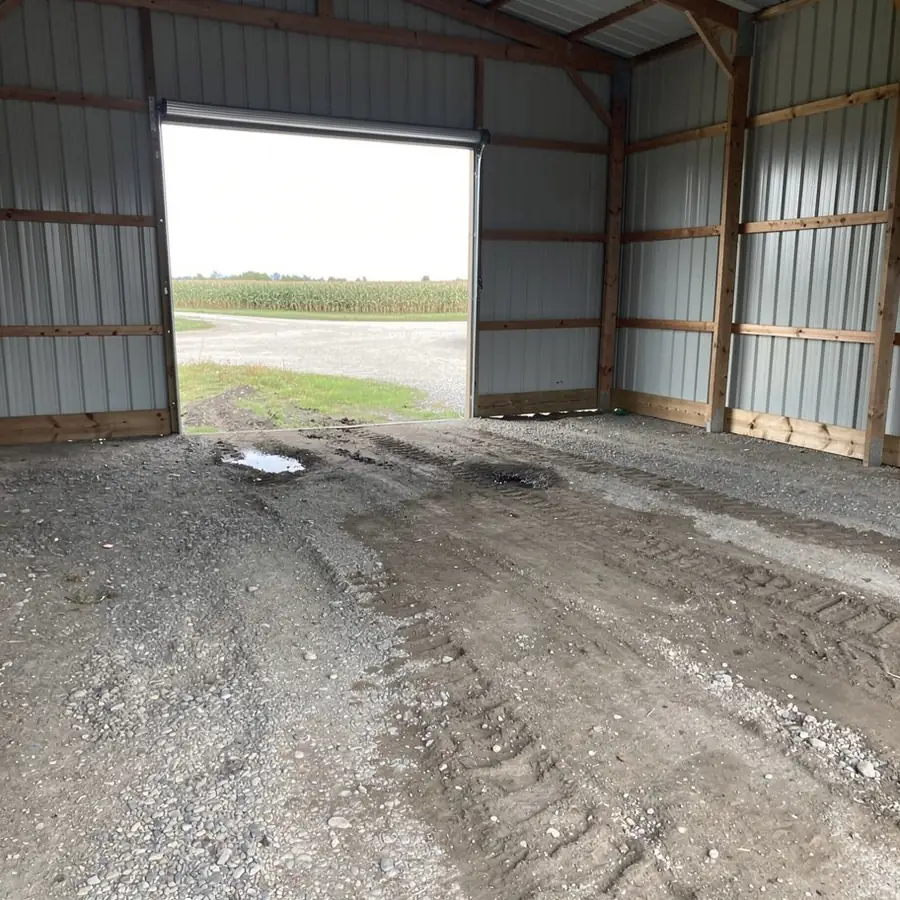
Many older garages and farm buildings were built straight on topsoil or old pasture, which has to come out. We strip the organic soil, lay geotextile over clay and build up compacted Granular A with a gentle fall toward the overhead door.
Asphalt sheds water but is not a vapour barrier, so eavestroughs and outside grading still need to keep runoff from flowing in under the walls.
We set the finished floor height to the overhead door's bottom seal so the door closes tight with no gap for snow or rodents. Outside, the floor ties into the driveway or apron with a saw-cut, keyed joint, and our asphalt driveway paving crew can pave both on the same day.
Cars, mowers and compact tractors sit well on our standard floor build. Buildings that take loaded grain trucks or large tractors get a deeper base built to our truck-lane spec: 150 mm of Granular A over 450 mm of Granular B, with 60 to 75 mm of HL8 under the HL3.
A car hoist needs concrete footings, so asphalt is not suitable under a lift. We can leave an opening for a concrete contractor to pour the hoist pad.
Our process
Paving indoors uses smaller equipment, more hand work and careful ventilation. A typical single or double garage floor is paved in one day once the base is ready.
The building is cleared of vehicles, fuel cans and stored goods. Every door is opened and fans move the hot asphalt fumes out while we work.
Organic soil comes out, fabric goes down where needed, and Granular A is compacted with a vibratory plate and roller in lifts.
A dump truck cannot raise its box inside a building, so hot mix is tipped at the door and carried in by skid steer.
The crew rakes and tamps the mix along walls, skirt boards, posts and door frames where no machine fits.
The HL8 binder lift and the HL3 surface lift are each rolled with a small double-drum roller while hot, with a plate compactor at the edges.
Doors stay open until the floor cools. Walk on it the same day, park cars after 48 to 72 hours and keep heavy equipment out for 2 weeks.
Pricing
Asphalt garage and shop floors typically cost $4.50 to $7.50 per sq ft before HST, with a $2,500 minimum job. Where a floor lands in that range depends on four things.
| Building | Floor area | Typical price |
|---|---|---|
| Single detached garage, 14 x 24 ft | About 336 sq ft | $2,500 minimum |
| Double detached garage, 24 x 24 ft | About 576 sq ft | $2,592 to $4,320 |
| Implement shed, 40 x 60 ft | About 2,400 sq ft | $10,800 to $18,000 |
If the lane to the building needs paving too, our private road and laneway paving crew can quote both together.
FAQ
Owners of garages and farm buildings from Kitchener out to Rockwood and Puslinch ask us these first.
Yes. We remove the organic soil, add and compact Granular A, grade it to fall toward the door and then pave two lifts of hot mix. A gravel floor that is already deep and clean can often be regraded and kept as part of the base.
Yes, over time. Fuel and oil soften the binder that holds asphalt together, so drip pans, fuel trays and quick cleanup of spills are what keep the floor solid.
No. A hoist's posts need anchors set in concrete footings sized by the hoist maker, and asphalt cannot hold them. We can pave the rest of the floor and leave the hoist area for a concrete contractor.
Walk on it once it cools, park cars after 48 to 72 hours and keep tractors, trailers and heavy equipment off for 2 weeks. Use plywood pads under any stands through the first summer, while the asphalt is still curing.
Free quote
Tell us the building size, what is on the floor now and what you will park on it, and we will visit within 2 to 3 business days. Our crews are WSIB covered and insured, and we send the WSIB clearance and certificate of insurance on request, usually the same day.