Estate driveways
Long Estate Driveways on Large Rural Lots
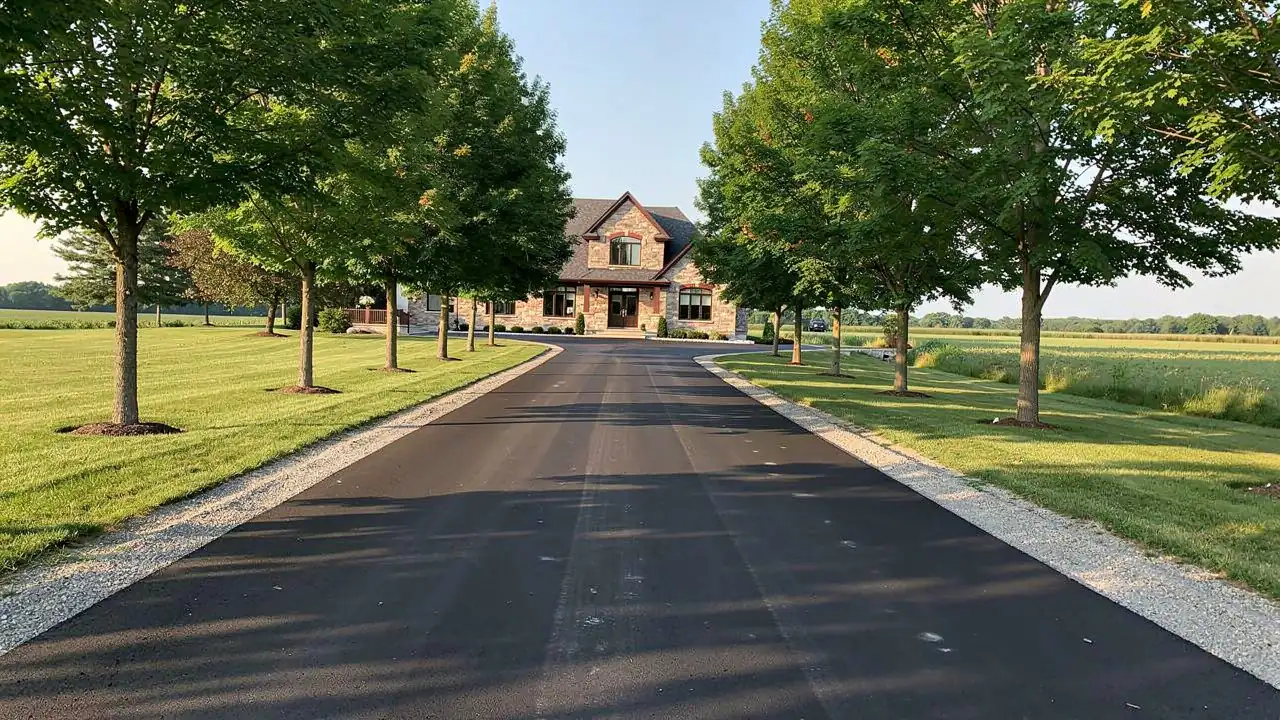
A long rural driveway is road building on a small scale: it needs a culvert at the ditch, supported edges, room for trucks to turn and hot mix that arrives on schedule. Skip any of those and it shows within a couple of winters as crumbling edges or a sunken entrance.
Culverts and the entrance apron
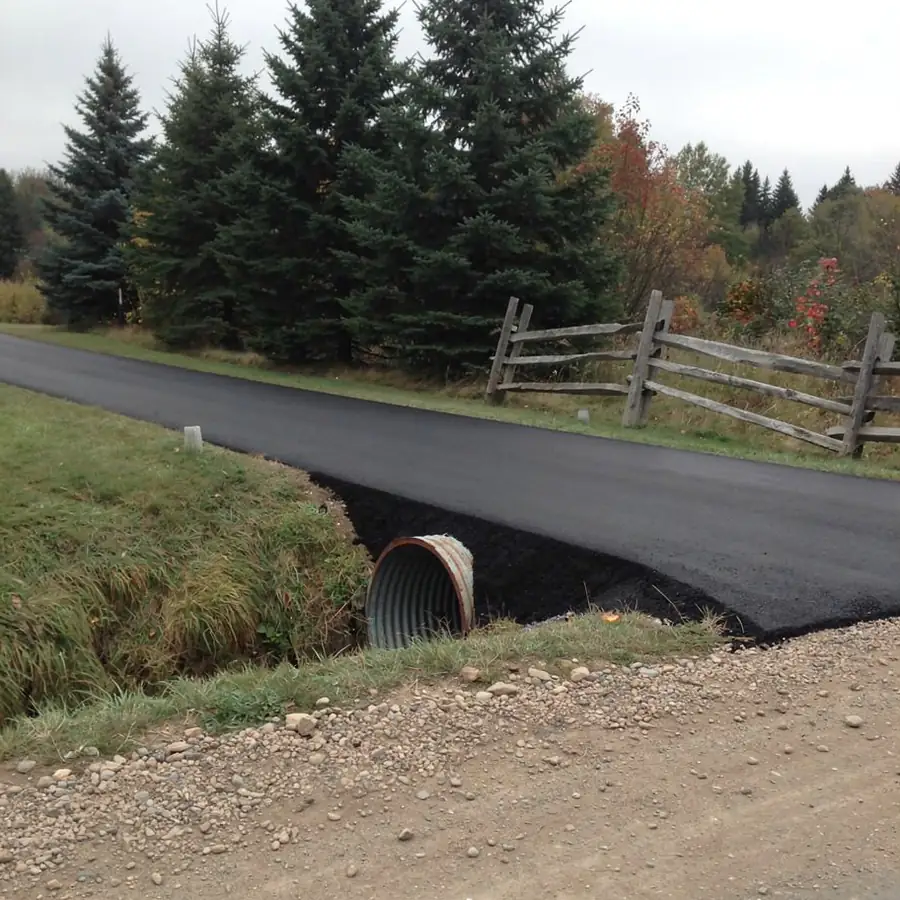
Where the driveway crosses the roadside ditch, the road authority usually sets the culvert size in its permit. We bed the pipe, backfill over it in compacted lifts and shape the apron so water stays in the ditch instead of running up the driveway.
Edge support
Asphalt with nothing beside it breaks off under tires. We shoulder both edges with compacted Granular A or topsoil so a wheel never drops off a raw edge.
Turnarounds for service trucks
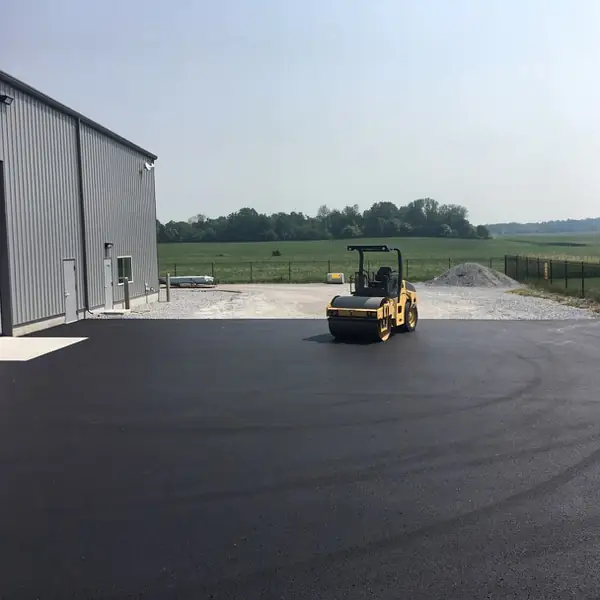
Propane, fuel oil and septic trucks need room to turn without backing down a long lane. We build turnarounds and parking pads to the heavy-use section: 200 to 250 mm of Granular A under 50 mm of HL8 and 40 mm of HL3.
Tonnage and pacing
Every 100 square metres of 60 mm compacted HL3 takes roughly 14 tonnes of hot mix, so a long lane needs loads arriving in sequence. We pace them so each load is laid above about 85 C and every joint between pulls gets tack coat.
A hot mix lane typically costs $4.50 to $7.50 per sq ft before HST, depending on how much base work it needs.