Spring Driveway Cleanup
After a winter of plowing, the driveway is grey with salt film, sand and tire grime. A spring wash brings back the colour and shows any cracks the winter opened.
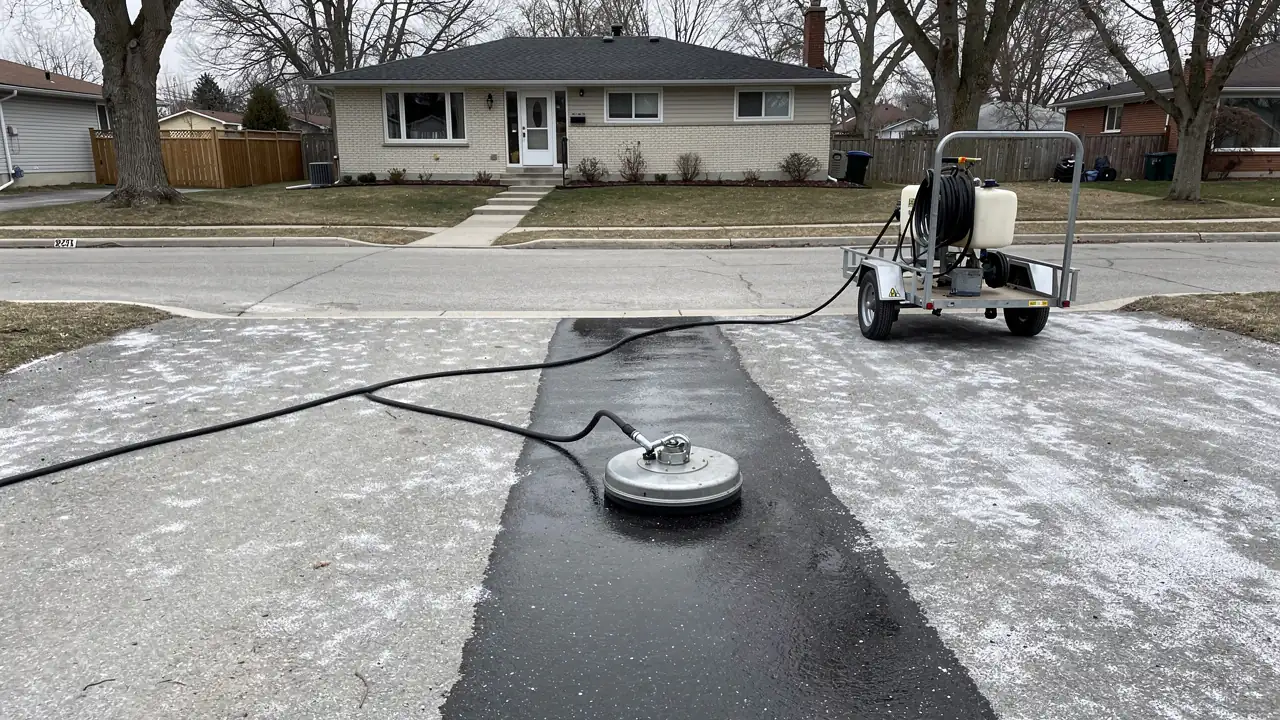
Asphalt-safe hot-water washing
Kitchener Asphalt Paving Pros power washes asphalt driveways and parking lots with hot water, a rotary surface cleaner and pressure set for asphalt rather than concrete. The aim is to lift oil, winter salt and grime without stripping the fine stone and binder that hold the surface together.
Homeowners book a wash in spring once the snowbanks are gone, and property managers book one before every sealcoat. Because we are a paving company, we can also tell you whether the clean surface underneath needs crack sealing or repair.
We have cleaned, sealed and repaired asphalt across Waterloo Region for 14 seasons. We are often called to driveways left rough and pale by a narrow, high-pressure nozzle, which is why our tips, pressure and water temperature are chosen for asphalt.
What we clean
We wash residential driveways, plaza and condo lots, drive-throughs and industrial yards, from Kitchener and Waterloo driveways to tree-lined country lots in Wellesley and St. Clements. Most visits are booked for one of three reasons.
After a winter of plowing, the driveway is grey with salt film, sand and tire grime. A spring wash brings back the colour and shows any cracks the winter opened.
Oil drips at stalls, fuel at pumps and grease near restaurant doors build up fast. We wash in sections with drains covered so the property stays open.
Sealer only bonds to clean, dry asphalt. Washing is the first step of most of our driveway sealing and sealcoating jobs.
Asphalt-safe
Asphalt needs a gentler wash because it is stone held together by a petroleum binder far softer than cement. A narrow, high-pressure jet cuts that binder away and blasts out the fine aggregate, leaving a rough, pale surface that ages faster.
That stripped texture holds more water and salt, so freeze-thaw damage, which our asphalt repair guide explains, arrives sooner. General pressure washers who mostly clean concrete and siding often miss this.
Our process
We clean asphalt with a hot-water pressure washer, a rotary surface cleaner and a wand with wide fan tips. Every wash follows these six steps.
Loose sand, grit and leaves are swept and blown into piles and bagged, so they never reach a drain.
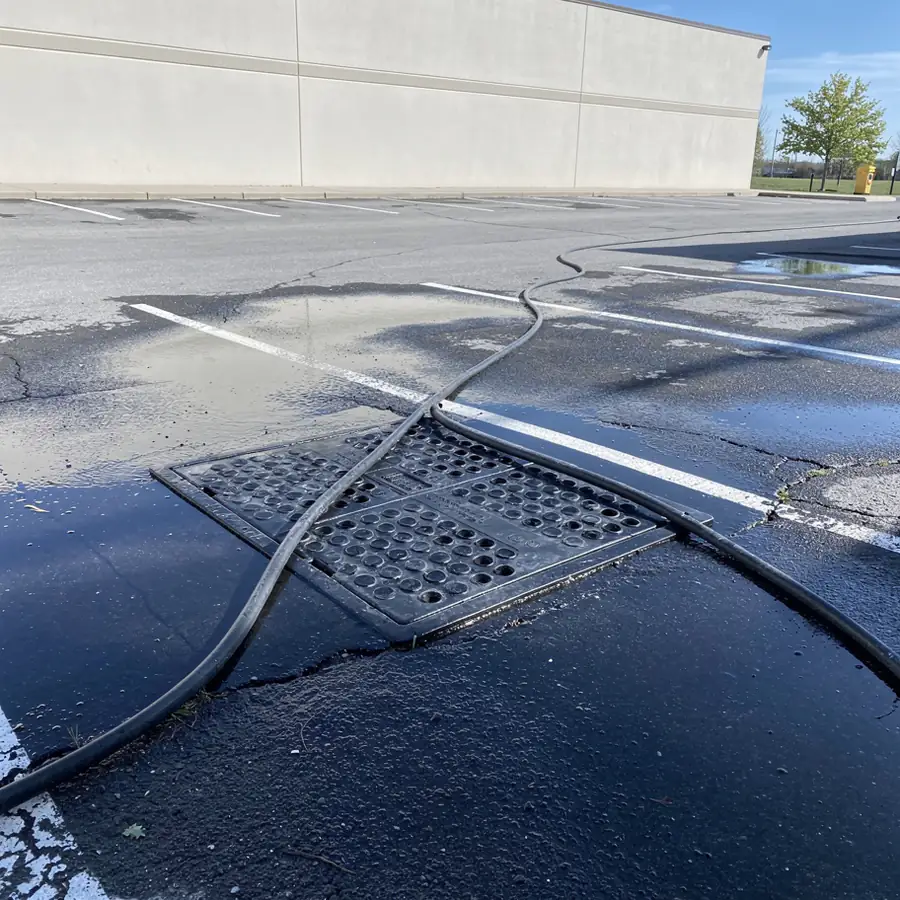
Catch basins and storm drain inlets near the work area are covered before any water is used.
Oil and grease spots get an asphalt-safe degreaser, left to dwell and worked with a stiff brush. Fresh spills are blotted with absorbent first.
The rotary surface cleaner covers the open areas in overlapping passes at controlled pressure.
Edges along garage slabs, curbs, steps and lawn are cleaned by wand with a wide fan tip, angled away from the asphalt edge.
Residue is collected, drain covers come off last, and the surface is left to dry fully. If sealing follows, oil spots are primed once the asphalt is dry.
Protecting creeks
Wash water that enters a storm drain does not go to a treatment plant. Catch basins in Kitchener and Waterloo flow to local creeks such as Schneider Creek and Laurel Creek, some through stormwater ponds, and on to the Grand River.
Oil, degreaser and grit washed into a catch basin end up in that water. That is why containment is part of every wash we do in the watershed the Grand River Conservation Authority works to protect.
Drain covers go on nearby catch basins, curb inlets and yard drains before washing starts and come off only after cleanup.
Grit and sand are picked up dry. Most of what clogs and pollutes a storm drain never gets wet.
Cleaners go only on stains, not the whole surface, and oily residue is soaked up with absorbent instead of being rinsed away.
On driveways we work the water toward the lawn or a gravel strip where it can soak in, rather than down the street gutter.
Fuel stations, drive-throughs and loading docks may need berms or full water recovery. We confirm the containment method for each site in the quote.
Pricing
Power washing a typical driveway costs $150 to $350 before HST. Parking lots run $0.08 to $0.20 per square foot, depending on size and how heavily the surface is stained.
| Job | Typical price | What changes it |
|---|---|---|
| Single or double driveway | $150 to $350 | Size, salt and sand build-up, number of oil spots, moss |
| Parking lot or yard | $0.08 to $0.20 per sq ft | Area, stain severity, drains to cover, containment needs |
| Wash before sealcoating | Quoted together with the sealing | Same visit and setup as the sealcoat |
Access matters too: a lot that must stay open and be washed in sections takes longer than an empty one. Every quote lists the area and the stain treatment so you know what is included.
FAQ
These are the questions homeowners and property managers ask most before booking a wash.
Not at the right pressure with the right tools. A rotary surface cleaner, wide fan tips and hot water clean without stripping the surface; a narrow jet held close is what does the damage.
Fresh stains usually come out; old, soaked-in stains fade but may not vanish, because the oil has softened the asphalt itself. If you are sealing next, a primer over the spot stops it bleeding through the new coat.
Once each spring to remove winter salt and sand, and again before every sealcoat, which is usually every 2 to 3 years. Drive-throughs and fuel areas may need more frequent spot cleaning.
Once it is completely dry, which usually means waiting until at least the next day. Sealer applied over damp asphalt peels, so we schedule sealcoating only after a dry check.
Often, yes. Clean asphalt shows every crack and soft spot, and we note them so you can decide on crack filling or patching before they grow.
Spring booking
April and May are the busiest weeks for driveway washing, as the salt and sand come off after the last snow. Book early, and pair the wash with sealing later in the season if your asphalt is due.